At SEMO, our usual yarn-dyed fabric MOQ is 1,500 metres when using standard yarns. If you only need a few hundred metres, we can also discuss producing the fabric as a paid sampling run. The exact quantity we can accept, the sampling fee and the delivery schedule need to be confirmed for the particular development. The 1,500-metre figure also needs an agreed order basis; do not assume it applies per colourway or that several designs can be combined.
For a smaller collection, that difference matters. Ordering more fabric changes how much money sits in one design before the collection reaches customers. A paid trial run gives you another arrangement to evaluate, with its own costs and conditions.
Before choosing a route, it helps to say what you need the fabric to establish. Reviewing a plaid layout, approving a physical sample and obtaining a few hundred metres for garment development are different tasks.
First, ask what the minimum covers
A minimum order quantity is only useful when you know how it is counted. Ask whether the quote applies to one fabric construction, one pattern, one colourway or a combined order. Do not assume that several colourways can be added together to reach the minimum.
Our current starting points for yarn-dyed fabric are:
| Order route | Quantity | What to confirm |
|---|---|---|
| Yarn-dyed fabric using standard yarns | Usually 1,500 metres | The construction, pattern, colourway allocation and order basis for the quote; the delivery schedule |
| Smaller yarn-dyed sampling run | A few hundred metres can be considered with a sampling fee | Whether the proposed development is suitable, the exact quantity, the fee and what it covers, and the delivery schedule |
For comparison, piece-dyed fabric with suitable existing greige fabric can be 1,000–1,400 metres per colour, depending on the dyeing-machine batch capacity. That is a separate process and does not set the minimum for a yarn-dyed check or stripe.
Decide what you need to confirm
If the question is the check layout or colour proportions, a digital pattern can make the discussion clearer. If you need to review proposed yarn colours and repeat in a physical sample, a handloom sample serves a different purpose. Neither gives you hundreds of metres for garment development or a limited production run.
A smaller yarn-dyed fabric trial run supplies that larger quantity and carries a sampling fee at SEMO. The actual arrangement needs a quotation. Ask for the total cost and enough detail to understand what you will receive, rather than comparing metre prices alone.
These are options to choose for the project, not a fixed sequence every order must follow. If you only need a small cutting to choose an existing fabric, say that. If you need yardage for garment development or a limited run, say that too. The word “sample” can otherwise hide a fairly large difference in quantity.
Work through the plaid before making it
Sometimes a fabric is close to the idea, but the stripe is too wide or one colour takes over the check. A clearer repeat makes that discussion easier.
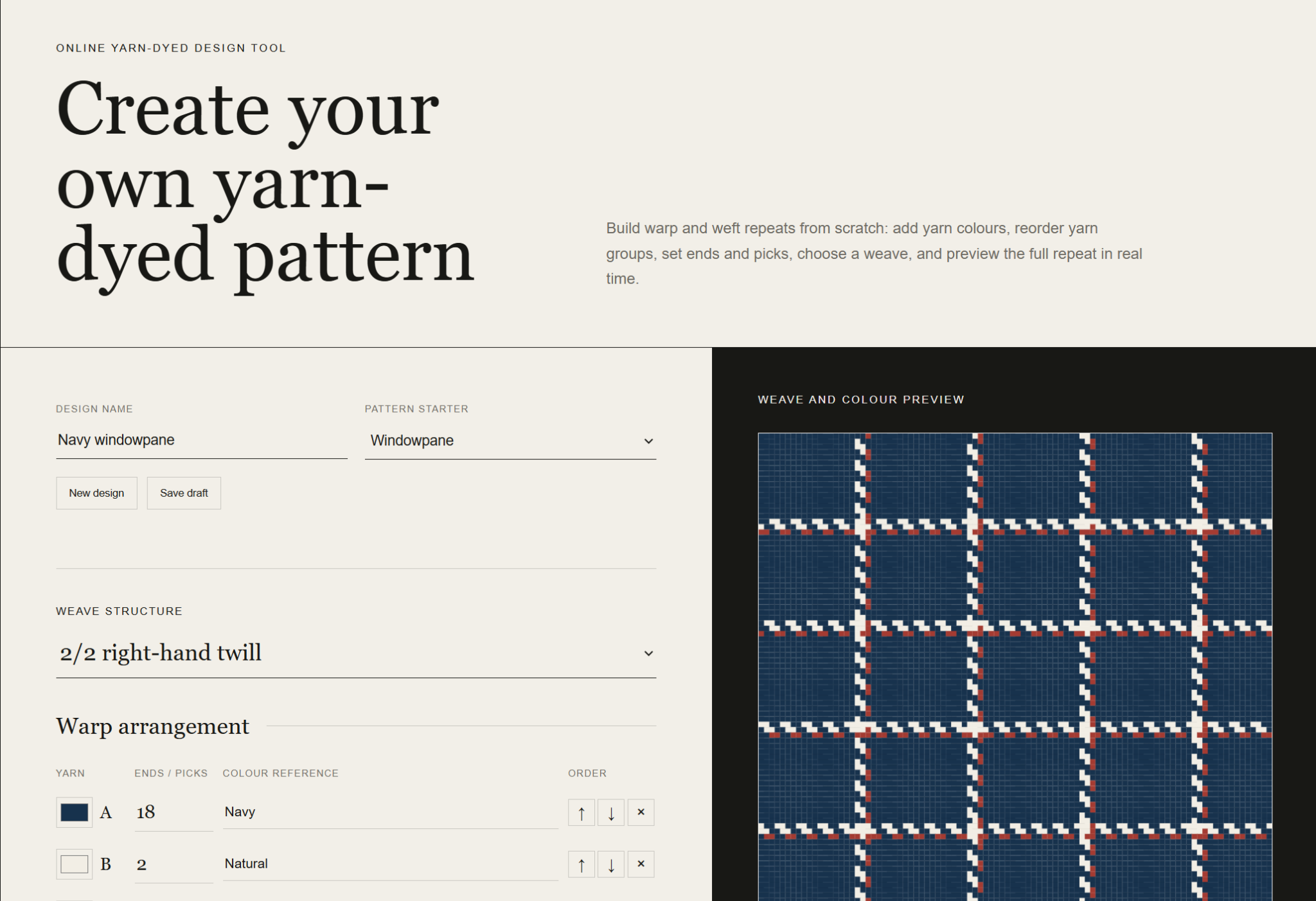
Our plaid pattern design tool lets you work through plaid layouts and colour combinations. You can use it to communicate a direction for a custom yarn-dyed development.
If you have a design reference, send it with the intended garment, required quantity and any preferred composition or target weight. Those details help us review the idea against the yarn and construction requirements. You do not need a complete specification to start the discussion.
The preview is an early design aid. Screen colours are not production colour standards, and an attractive digital pattern still needs a physical fabric behind it.
Keep the physical approval separate
Online photos cannot tell you exactly how a fabric feels. A digital repeat cannot settle that either.
Use a physical cutting to review handle, drape and pattern scale. For a custom development, agree which physical colour reference and sample will be used for approval. If garment performance matters, identify the required tests and care method before confirming production.
A successful sample also does not establish that every later batch will be identical. Before a bulk order, confirm the fabric specification, approval reference, relevant tolerances and inspection requirements. If you expect to reorder, discuss the repeat-order conditions too. Those details need to be agreed with the supplier; a preview image cannot replace them.
For a broader checklist, see what to include when requesting fabric swatches.
Start with the quantity you actually need
For an initial yarn-dyed enquiry, the following information is useful where you have it:
- The garment and intended use.
- The preferred fibre composition, target weight and width.
- The plaid or stripe reference, including any tool design you have prepared.
- The quantity needed now, the number of colourways and whether a later repeat order is part of the plan.
- The requested delivery date and any required performance checks.
These are discussion points, not a requirement to arrive with every answer. They give us a basis for reviewing a standard order or a paid sampling run. If the quantity is below our usual minimum, include it in the first message. There is little point discussing a 1,500-metre order when the collection needs a few hundred.
Send your development brief to SEMO, or begin with the yarn-dyed fabric collection.